A Comprehensive Guide

Everything That You Need To Know About Whisky Cask Investment

Discover comprehensive insights, tools, and strategies for successful whiskey cask investment

How to Get Started

Begin your whiskey cask investment journey with these essential steps.

Define Objectives

Amount, time horizon (minimum 5 years), and return expectations.

Select a Reputable Partner

Confirm HMRC-bonded storage, insurance coverage, transparent fees, and exit options.

Use Analytical Tools

Leverage calculators and the above charts to model scenarios and make data-driven decisions.

By combining market fundamentals, tax advantages, and natural appreciation, Irish whiskey cask investment offers a compelling alternative asset for investors with appropriate risk tolerance and time horizons.

01. What Is Whiskey Cask Investment and Why Choose Irish Whiskey?

By combining market fundamentals, tax advantages, and natural appreciation, Irish whiskey cask investment offers a compelling alternative asset for investors with appropriate risk tolerance and time horizons.

Irish whiskey casks are especially compelling due to:

  • Wasting Asset Tax Treatment: Evaporation qualifies casks as “wasting assets,” exempting UK-based investors from Capital Gains Tax on cask-to-cask sales.
  • Rapid Market Growth: Global Irish whiskey demand is surging, outpacing production capacity, creating scarcity and upward price pressure.
  • Tangible and Portfolio Diversifier: Physical ownership with low correlation to equities and bonds.

02. Investment Process: Step-by-step

Follow our structured approach to whiskey cask investment.

  1. Cask Selection: Choose between new-make spirit (entry ~€2,500–€5,000), premium new-make (€10,000+), or aged casks (5+ years, €30,000–€50,000+).
  2. Legal Documentation: Receive a Delivery Order from bonded warehouse plus a bailment contract with unique cask ID and owner details.
  3. Storage & Insurance: Store in an HMRC-approved bonded warehouse under excise suspension; costs range £50–£100/year plus insurance (£50–£200/year).
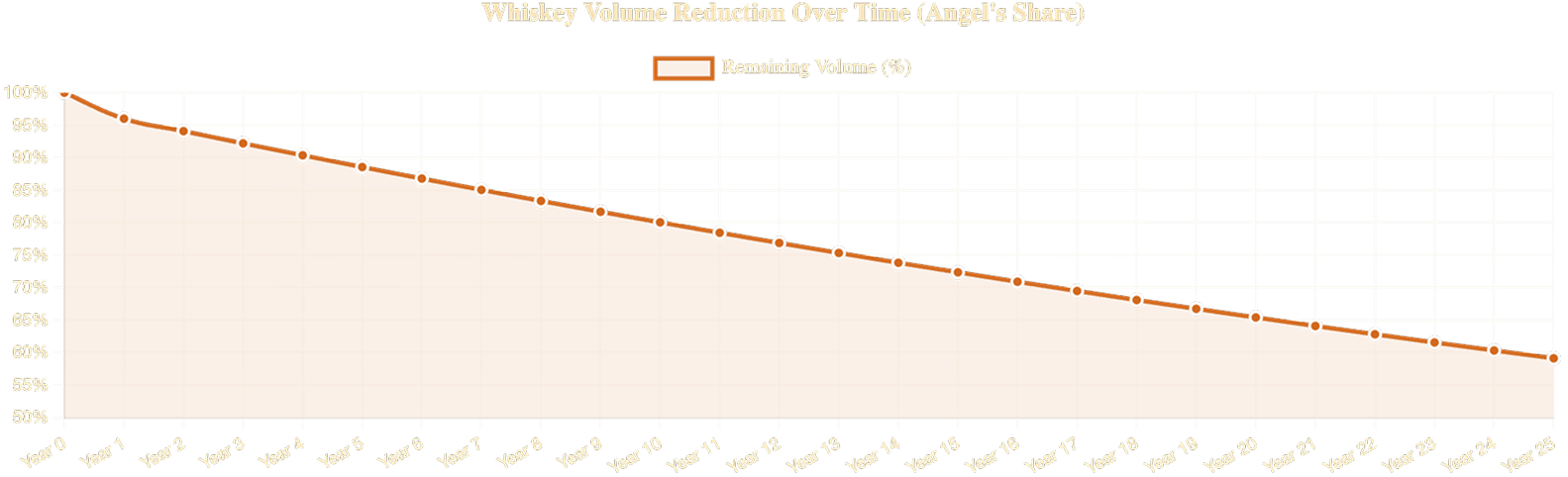
  4. Maturation: Natural aging enhances flavour while volume reduces via the Angel’s Share: ~4% in year 1, then ~2% annually.
  5. Exit & Monetisation: Options include distillery buy-back, independent bottlers, auction platforms, private collector sales, or personal bottling.

03. Understanding Evaporation: The Angel’s Share

As whiskey matures, a portion evaporates (“Angel’s Share”), concentrating flavors. The first year sees ~4% loss, then ~2% each subsequent year.

04. Cost Structure: Ongoing and Transactional Expenses

Even though storage and insurance may be included initially, understanding additional costs is crucial for accurate ROI modeling.

£375: Storage (5 years × £75)
£625: Insurance (5 years × £125)

£100: Regauging (once)
£200: Purchase Commission (2%)

£360: Sale Commission (2%)
£1,660: Total

05. Calculating Returns: Interactive Tools

A robust Cask Investment Calculator should allow you to input:

  1. Initial investment
  2. Holding period
  3. Expected annual appreciation
  4. Storage, insurance, and commission rates
  5. Angel’s Share parameters
 Use online dilution and cask-yield calculators (e.g., Flask Fine Wines Cask Calculator) to estimate bottle count or final ABV if you choose to bottle.

06. Calculating Returns: Interactive Tools

Understanding Potential Returns

  • Average Casks: 12–15% p.a.
  • Premium Aged Stock: 20%+ p.a.
  • Rare Casks: Exceptional cases can exceed 30% p.a.


Example Return Calculation
A £10,000 cask held 5 years, sold at £18,000 incurs £1,660 in costs, yielding £6,340 net profit → 63.4% total return (10.5% p.a.).

07. Risks and Mitigation

Understanding and managing risks is crucial for successful whiskey cask investment.

  • Market Risk: Prices fluctuate with consumer trends; mitigate by diversified distilleries and age profiles.
  • Liquidity Risk: Illiquid asset; plan exits in advance, use reputable auction platforms.
  • Storage & Damage: Bonded warehouses and comprehensive insurance mitigate physical risks.
  • Fraud: Verify HMRC bond licences, WOWGR registration, and inspect documentation.