

There is something undeniably appealing about owning a cask of Scotch whisky. A spirit produced by an established distillery, maturing quietly in a Scottish warehouse, with the possibility of developing into something increasingly distinctive over time.
But before considering its age, provenance or future value, there is a more fundamental question worth asking. How do you know the cask is actually yours?
It sounds straightforward, yet whisky cask ownership is not quite like purchasing a physical item that you can take home. The cask will typically remain in a specialist warehouse, potentially for many years, while the owner relies on contractual arrangements and supporting records to establish their rights.
With growing interest in whisky as a physical asset, understanding what constitutes genuine ownership has become an essential part of the buying process. And in a market where transactions can involve brokers, intermediaries and warehouse operators, knowing what to look for could make all the difference.
The Difference Between Buying Whisky and Owning a Cask
When someone purchases a bottle of whisky, ownership is usually uncomplicated. They pay for the product, receive it and take possession.
A whisky cask is different. The spirit must remain in Scotland during the maturation period if it is to qualify as Scotch whisky, and casks are generally stored in specialist facilities operating under established warehousing and excise arrangements.
The buyer therefore does not usually take physical possession. Instead, they acquire rights to an identified cask under the terms of the transaction.
This distinction matters because paying for a cask and establishing enforceable ownership rights are not necessarily the same thing.
A credible purchase process should make clear what is being sold, who has the authority to sell it, where the cask is held and how the buyer’s ownership will be recognised.
A Certificate Looks Impressive. But What Does It Prove?
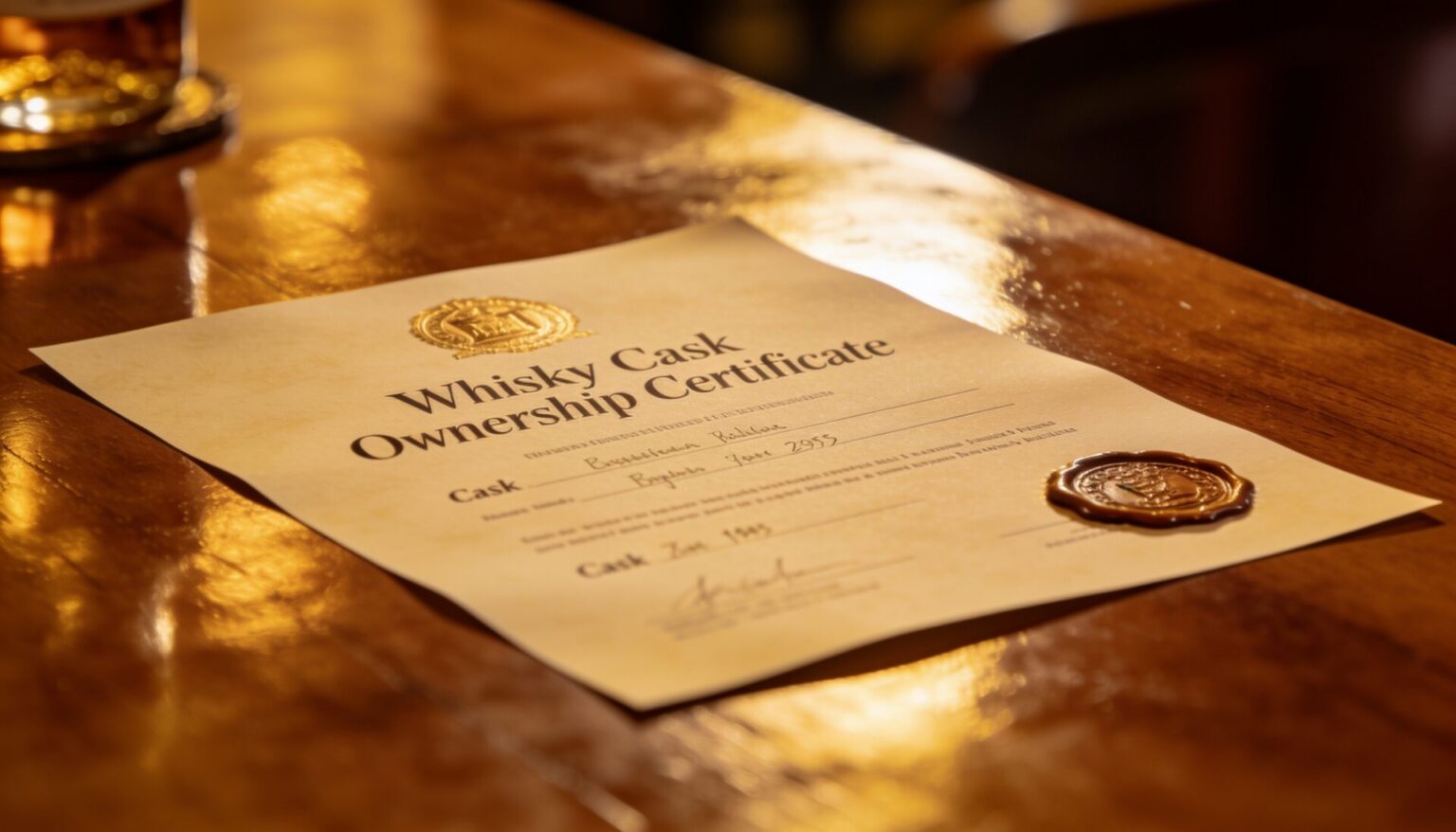
Ownership certificates can be an attractive part of the purchasing experience. They may feature the distillery name, filling date, cask number and details of the spirit, creating a tangible connection to an asset that the owner may never physically see.
However, the appearance of a certificate is not what determines legal ownership.
A certificate issued by a broker or seller may provide useful evidence of a transaction, but it does not automatically demonstrate that the warehouse recognises the purchaser’s rights or that an effective transfer has taken place.
The underlying documentation is what matters.
Buyers should expect the contractual arrangements to identify the specific asset being purchased, including the relevant cask number, distillery, filling date and warehouse details. They should also establish what documents will be issued after payment and how those documents relate to the warehouse’s own records.
The important question is not whether the certificate looks convincing, but whether the ownership arrangements can be independently verified.
The Warehouse Is More Important Than You Might Think
Behind every maturing whisky cask is a warehouse responsible for holding the physical asset.
Warehouses maintain records of the casks in their custody, including information about the spirit and the parties authorised to deal with it. The precise arrangements vary, particularly where casks are held through brokers or other intermediaries.
For prospective owners, the warehouse plays a central role in the verification process.
It is worth establishing whether the warehouse can confirm the existence and identity of the cask, how the buyer’s rights will be recorded or acknowledged, and what procedures would apply if the cask were eventually transferred or sold.
A document sometimes referred to as a delivery order may form part of these arrangements. However, its legal effect depends on the relevant contract and warehouse procedures. Receiving a delivery order does not, by itself, establish that every necessary transfer step has been completed.
Buyers should seek clarity about the actual ownership structure rather than relying on a particular document title.
Five Questions Worth Asking Before You Pay
A transparent whisky cask purchase should withstand reasonable scrutiny. Before committing funds, prospective owners should be comfortable with the answers to five questions.
- Can the specific cask be identified?
The transaction should relate to an identifiable asset, supported by details such as the cask number, distillery, filling date, cask type and warehouse location.
- Who currently owns the cask?
The seller should be able to explain their authority to transfer ownership and whether any intermediary is acting on behalf of another party.
- How will ownership be transferred and evidenced?
Buyers should understand the legal and administrative process, including the role of the warehouse and the documents they will receive.
- Can the information be independently verified?
Where possible, there should be an appropriate means of confirming the relevant details through the warehouse or another authorised independent party.
- What happens if the original broker is no longer involved?
A long-term ownership arrangement should make clear how the owner can exercise their rights, arrange services or pursue a sale if the original intermediary ceases trading.
These questions are not intended to make whisky cask ownership unnecessarily complicated. They help establish whether the proposed transaction is sufficiently transparent for the buyer to make an informed decision.
Why Independent Verification Matters More Than Ever
Whisky cask ownership has attracted attention from individuals looking beyond conventional investment markets. However, the purchase of physical whisky casks as an investment generally falls outside the Financial Conduct Authority’s regulatory perimeter.
That means buyers should not assume they have access to the protections associated with FCA-regulated investments.
It also makes careful due diligence particularly important.
A professional-looking website, persuasive sales presentation or confident projection of future returns should never replace independent checks on the underlying asset.
Prospective owners should be cautious about arrangements where documentation is vague, the warehouse cannot be identified or the seller is unwilling to explain how ownership will be established.
Pressure to make a quick decision can also be a warning sign, particularly where a seller suggests that an opportunity will disappear unless payment is made immediately.
Our article on eight warning signs every whisky cask buyer should know explores the risks associated with misleading claims, insufficient documentation and unrealistic expectations.
What Happens to Your Cask Over the Next Ten Years?
Ownership documentation is not simply something to file away after completing the purchase.
Whisky casks may remain in storage for many years, during which the spirit continues to mature and the owner’s circumstances may change.
The cask itself will also evolve. Natural evaporation, commonly known as the Angel’s Share, gradually reduces the volume of spirit, while its alcoholic strength and characteristics may change over time.
Owners may receive updated measurements through regauging or other warehouse services. These records can provide useful information about the asset, although they should not be confused with proof of legal ownership.
Insurance, storage charges and warehouse arrangements also deserve periodic review.
Keeping organised records of the original purchase, subsequent correspondence and any changes to the holding arrangements can make it easier to manage the cask over the longer term.
The Real Test May Come When You Decide to Sell
Imagine owning a whisky cask for twelve years. The spirit has matured, market conditions have changed and you decide it may be time to explore a sale.
A prospective buyer expresses interest, but before proceeding they want confirmation of the cask’s identity, its current warehouse location, the remaining volume of spirit and your authority to transfer ownership.
If the documentation is complete and the relevant parties can verify the details, the buyer has a clearer basis for assessing the transaction.
If ownership records are inconsistent or the warehouse arrangements are unclear, the process may become considerably more difficult.
This is one reason why documentation should be treated as part of the asset’s commercial foundations rather than simply an administrative requirement.
Good paperwork will not guarantee an increase in value or create buyer demand where none exists. It can, however, help establish the information needed for a prospective buyer to consider the asset.
For those exploring the market for the first time, our guide to buying a whisky cask explains the wider purchase process and the practical considerations involved.
Frequently Asked Questions
How do I know if I legally own a whisky cask?
Ownership depends on the contractual arrangements and whether the relevant transfer has been legally effective. Buyers should obtain appropriate purchase and transfer documentation and seek independent confirmation of the warehouse arrangements wherever possible.
Is a whisky cask ownership certificate enough?
Not necessarily. A certificate may provide evidence of the transaction, but it does not automatically establish legal ownership. The underlying contract, transfer arrangements and relevant warehouse records are more important.
What is a whisky cask delivery order?
A delivery order is a document that may be used as part of the process of instructing or facilitating the transfer or release of goods held in a warehouse. Its legal effect depends on the relevant arrangements, so buyers should confirm what it establishes and whether further steps are required.
Can I contact the warehouse where my whisky is stored?
This depends on the warehouse’s policies and the contractual arrangements. Some warehouses may deal directly with owners, while others communicate through authorised account holders or intermediaries. The verification process should be explained before purchase.
What happens if my whisky cask broker goes out of business?
The outcome depends on the ownership structure and contractual rights. Clearly established ownership may provide a stronger basis for dealing with the warehouse or another authorised provider, but owners should not assume that every arrangement offers the same protections.
Confidence Starts With Knowing What You Own
Whisky cask ownership can offer an interesting way to engage with one of Scotland’s most established industries. The opportunity to own a physical asset as it matures is part of its appeal, but that appeal should always be supported by clear and verifiable arrangements.
Understanding who holds the cask, how ownership is established and what rights the purchaser receives is fundamental to making an informed decision.
The most important questions are not always about the future value of the whisky. Sometimes, they are about establishing exactly what is being purchased today.
If you are considering whisky cask ownership and would like to understand the process, documentation and practical considerations involved, book a consultation with the Viticult team to discuss your options.
Important information: Whisky cask investment is generally not regulated by the Financial Conduct Authority. Casks may fall in value, can be difficult to sell and do not offer guaranteed returns. This article is provided for general information and does not constitute financial, legal or tax advice. Independent professional advice should be sought where appropriate.